
When a container is transported by truck, train, or ship, it is constantly exposed to movement, vibration, braking, acceleration, and rough sea conditions. If the cargo inside isn’t secured properly, it can shift, fall over, or get damaged.
This is where lashing comes in.
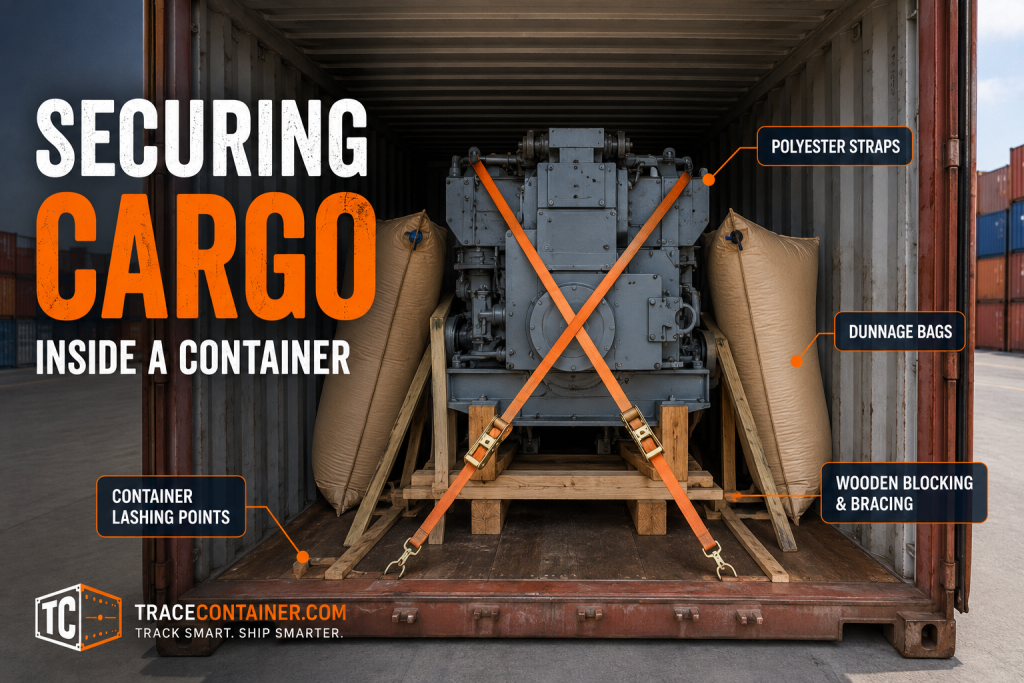
Lashing is the process of securing cargo inside a shipping container using straps, chains, ropes, wires, or other securing equipment to prevent the cargo from moving during transit.
Why is Lashing Important?
Cargo inside a container is rarely stationary during its journey.
A container may experience:
- Heavy braking on the road.
- Sudden acceleration.
- Sharp turns.
- Vibrations from rail transport.
- Strong waves and rolling at sea.
- Loading and unloading by cranes.
Without proper lashing, even a small movement can cause the cargo to slide, tip over, or collide with other cargo inside the container.
What Can Happen Without Lashing?
Poorly secured cargo can lead to serious problems, such as:
- Damage to the goods.
- Cargo falling inside the container.
- Packages crushing each other.
- Container doors becoming difficult or dangerous to open.
- Injury to workers unloading the container.
- Insurance claims and financial losses.
- Delays due to cargo inspection or repacking.
In severe cases, cargo movement can even affect the container’s balance, creating safety risks during transportation.
How is Cargo Lashed?
The lashing method depends on the type, size, and weight of the cargo.
Common lashing materials include:
- Polyester lashing straps.
- Steel chains.
- Steel wire ropes.
- Nylon ropes.
- Wooden blocking and bracing.
- Dunnage bags (airbags placed between cargo).
- Rubber mats to increase friction.
Heavy machinery usually requires chains and steel wire ropes, while cartons and pallets may only need straps and dunnage bags.
Real-Life Example
Imagine a company exporting a 5-ton industrial machine from India to Germany.
If the machine is simply placed inside the container without being secured, it could slide several centimeters when the vessel encounters rough seas or when the truck brakes suddenly.
Instead, the machine is:
- Bolted or blocked with wooden supports.
- Secured using heavy-duty lashing chains or polyester straps.
- Fixed to the container’s lashing points.
This prevents movement throughout the journey and ensures the machine arrives safely.
Is Lashing Required for Every Shipment?
Not always.
Small palletized cargo that completely fills the container may require minimal securing. However, heavy, oversized, high-value, or irregularly shaped cargo should always be properly lashed.
Industries that commonly use lashing include:
- Machinery
- Automobiles
- Steel products
- Construction equipment
- Wind turbine components
- Industrial equipment
- Project cargo
For these shipments, proper lashing is not just recommended—it’s essential.
Conclusion
Lashing is one of the most important safety practices in container shipping. It prevents cargo from shifting during road, rail, and sea transport, protecting both the goods and the people handling them.
Whether you’re shipping a single machine or a full container of industrial equipment, proper lashing helps reduce damage, improve safety, and ensure your cargo reaches its destination in the same condition it left the warehouse.