If you’re importing or exporting goods, one of the first professionals you’ll come across is a Freight Forwarder. They play a crucial role in moving cargo from one country to another by coordinating every stage of the shipment.
A common misconception is that freight forwarders own ships, aircraft, or trucks. In reality, they usually don’t own the transportation they organize it.
Think of a freight forwarder as the project manager of your shipment.
Who is a Freight Forwarder?
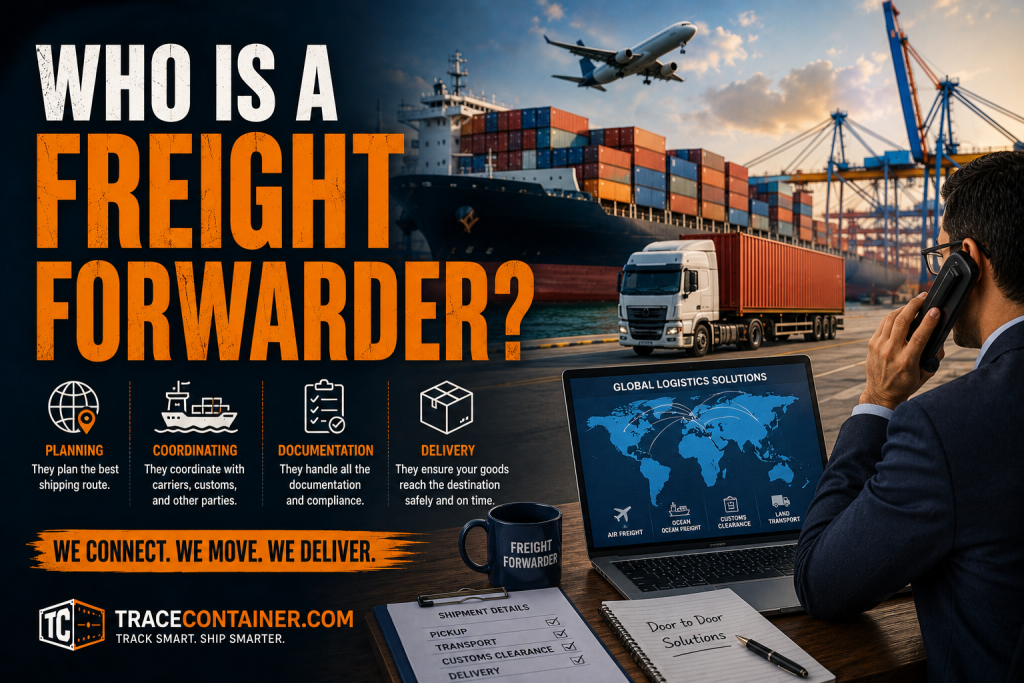
A Freight Forwarder is a company or individual that arranges the transportation of goods on behalf of importers and exporters.
Instead of transporting the cargo themselves, they work with various service providers such as:
- Shipping lines
- Airlines
- Trucking companies
- Rail operators
- Customs Brokers (CHA)
- Warehouses
- Container Freight Stations (CFS)
- Inland Container Depots (ICD)
Their job is to ensure your shipment reaches its destination smoothly, on time, and with all the required documentation.
What Does a Freight Forwarder Do?
A freight forwarder manages almost every aspect of an international shipment.
1. Plans the Best Shipping Route
Based on your cargo, budget, and delivery timeline, they decide whether to ship by:
- Sea Freight
- Air Freight
- Rail
- Road
- Or a combination of these (Multimodal Transport)
For example, urgent electronics may be shipped by air, while heavy machinery is usually transported by sea.
2. Books Space with Carriers
A freight forwarder books cargo space with:
- Shipping lines
- Airlines
- Consolidators
Since they handle large shipment volumes, they often negotiate better freight rates than individual importers.
3. Prepares Shipping Documents
They assist with preparing and coordinating documents such as:
- Commercial Invoice
- Packing List
- Bill of Lading (B/L)
- Air Waybill (AWB)
- Certificate of Origin
- Insurance documents
- Export documents
- Import documentation
Accurate documentation is essential to avoid delays and customs queries.
4. Coordinates Customs Clearance
Although a freight forwarder manages the shipment, customs clearance is typically handled by a licensed Customs Broker (formerly known as a CHA in India).
The freight forwarder works closely with the Customs Broker by:
- Sharing shipment documents.
- Providing arrival details.
- Coordinating cargo examination.
- Following up on cargo release.
- Ensuring the shipment moves to the next stage after customs clearance.
In many cases, the importer communicates only with the freight forwarder, while the forwarder coordinates with the Customs Broker behind the scenes.
5. Tracks the Shipment
A freight forwarder monitors the shipment from origin to destination.
They keep customers updated about:
- Cargo departure
- Transshipment
- Vessel delays
- Arrival at destination
- Customs status
- Final delivery
Many also provide online shipment tracking.
Freight Forwarder vs CHA (Customs Broker)
These two roles are often confused, but they have different responsibilities.
| Freight Forwarder | CHA / Customs Broker |
|---|---|
| Arranges transportation of goods | Clears goods through Customs |
| Books cargo with shipping lines and airlines | Files customs documents like the Bill of Entry and Shipping Bill |
| Coordinates shipping from origin to destination | Represents the importer or exporter before Customs |
| Handles freight, routing, and logistics | Ensures compliance with customs regulations |
| Can manage international shipments across multiple countries | Primarily involved in customs clearance within a country |
A Simple Example
Imagine you’re importing machinery from Germany to Mumbai.
The Freight Forwarder will:
- Arrange pickup from the supplier.
- Book space on a vessel.
- Coordinate sea transportation.
- Send shipping documents.
- Track the shipment until it reaches India.
- Arrange delivery after customs clearance.
The CHA (Customs Broker) will:
- File the Bill of Entry.
- Pay applicable customs duties on your behalf.
- Coordinate customs inspection if required.
- Obtain customs clearance.
- Secure the release of the cargo from the port.
In short, the freight forwarder manages the journey, while the Customs Broker manages the legal customs clearance.
Why Should You Use a Freight Forwarder?
Working with an experienced freight forwarder offers several advantages:
- Saves time by coordinating multiple service providers.
- Finds cost-effective shipping options.
- Handles complex shipping documentation.
- Provides shipment visibility and updates.
- Helps avoid delays caused by poor coordination.
- Acts as a single point of contact throughout the shipment.
For businesses involved in international trade, a reliable freight forwarder simplifies the shipping process and reduces operational headaches.
Conclusion
A Freight Forwarder is the logistics coordinator who brings together shipping lines, transport companies, warehouses, and Customs Brokers to ensure cargo moves efficiently from the seller to the buyer.
While a Customs Broker (CHA) specializes in customs clearance, a freight forwarder oversees the entire transportation process. Together, they play different but equally important roles in ensuring international shipments reach their destination without unnecessary delays.