If you’ve ever looked closely at a shipping container, you may have noticed a small metal plate attached to one of its doors. This is called the CSC Plate, and it’s one of the most important identification plates on a shipping container.
The CSC Plate confirms that the container has been inspected, approved, and certified for international transport. Without a valid CSC Plate, a container cannot legally be used for international shipping.
What is a CSC Plate?
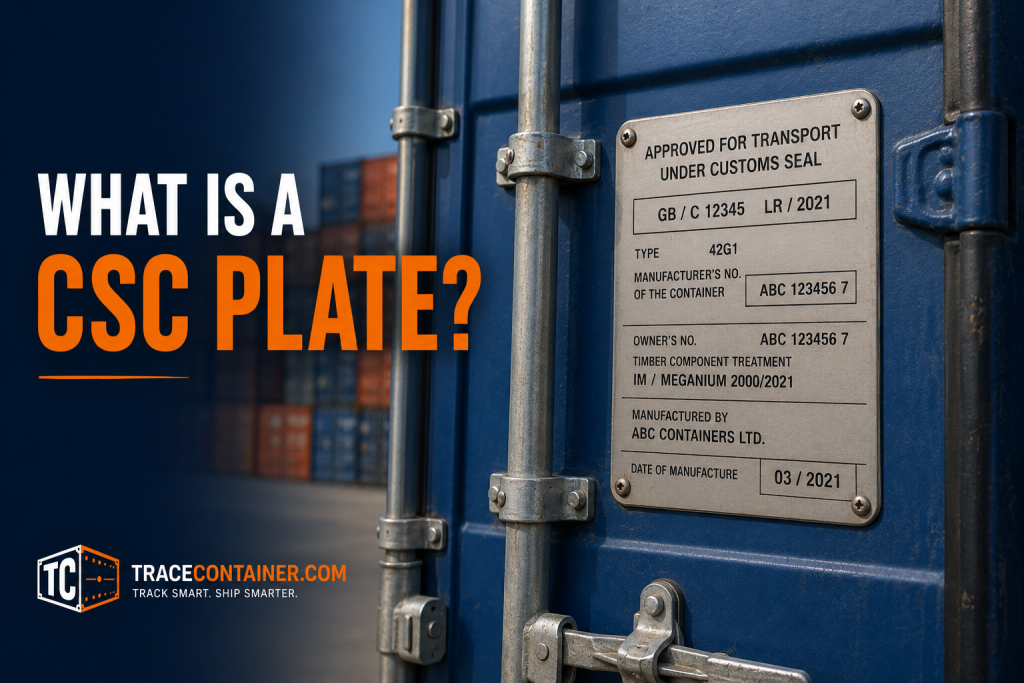
CSC stands for Convention for Safe Containers.
The CSC Plate is a metal safety approval plate permanently attached to every container used in international trade. It certifies that the container complies with the safety standards established under the International Convention for Safe Containers (CSC), 1972, developed by the International Maritime Organization (IMO).
Think of it as a fitness certificate for a shipping container.
Just as a vehicle needs to be roadworthy, a shipping container must be certified as safe before it can carry cargo across the world.
Why is the CSC Plate Important?
The CSC Plate helps ensure that the container is structurally safe for transporting cargo by:
- Ship
- Truck
- Rail
It provides assurance to:
- Shipping lines
- Customs authorities
- Port operators
- Freight forwarders
- Importers and exporters
that the container meets international safety requirements.
A container without a valid CSC Plate may be rejected by shipping lines or ports.
What Information Does a CSC Plate Contain?
Although the layout may vary slightly between manufacturers, a CSC Plate typically includes:
- Container Owner
- Approval Reference
- Container Identification Number
- Date of Manufacture
- Maximum Gross Weight
- Allowable Stacking Weight
- Racking Test Load Value
- CSC Safety Approval Number
- ACEP or Next Examination Date (depending on the inspection program)
These details help authorities verify that the container is safe to use.
Where is the CSC Plate Located?
The CSC Plate is usually fixed to the left-hand door of the shipping container, near the container’s identification markings.
It is permanently attached using rivets or welding and remains with the container throughout its service life.
What is ACEP?
Many modern containers display ACEP (Approved Continuous Examination Programme) on the CSC Plate.
Instead of showing a specific inspection due date, containers under the ACEP program are inspected regularly by the container owner as part of an approved maintenance program.
If a container is not under ACEP, the CSC Plate will usually display the Next Examination Date (NED), indicating when the container must be inspected again.
Real-Life Example
Suppose an exporter books a container to ship machinery from India to Germany.
Before the container is accepted for loading, the shipping line checks the CSC Plate to verify:
- The container is certified for international transport.
- The maximum weight is suitable for the cargo.
- The safety approval is still valid.
- The inspection requirements have been met.
Only after these checks is the container approved for shipment.
CSC Plate vs Container Number
Many beginners confuse these two.
| CSC Plate | Container Number |
|---|---|
| Safety certification plate | Unique identification number of the container |
| Contains technical and safety information | Used for container tracking |
| Confirms the container is safe for international transport | Identifies the container worldwide |
| Fixed as a metal plate on the container door | Printed on all sides of the container |
For example:
- Container Number: MSCU 1234567
- CSC Plate: Contains the container’s safety approval and technical specifications.
Conclusion
The CSC Plate is the shipping container’s official safety certificate. It confirms that the container meets international safety standards and is approved for transporting cargo across the world.
Whether you’re an importer, exporter, freight forwarder, or logistics professional, understanding the CSC Plate helps you verify that a container is safe, compliant, and ready for international shipping. Before loading a container, it’s always a good practice to check that its CSC Plate is present and valid.