Every product you buy from another country—whether it’s a mobile phone, car parts, machinery, or raw materials—has one thing in common: an importer.
An importer is the person or business responsible for bringing goods into a country from overseas. They are at the center of the entire import process, coordinating with suppliers, freight forwarders, Customs Brokers (CHA), shipping lines, transporters, banks, and Customs authorities to ensure the shipment reaches its destination.
Who is an Importer?
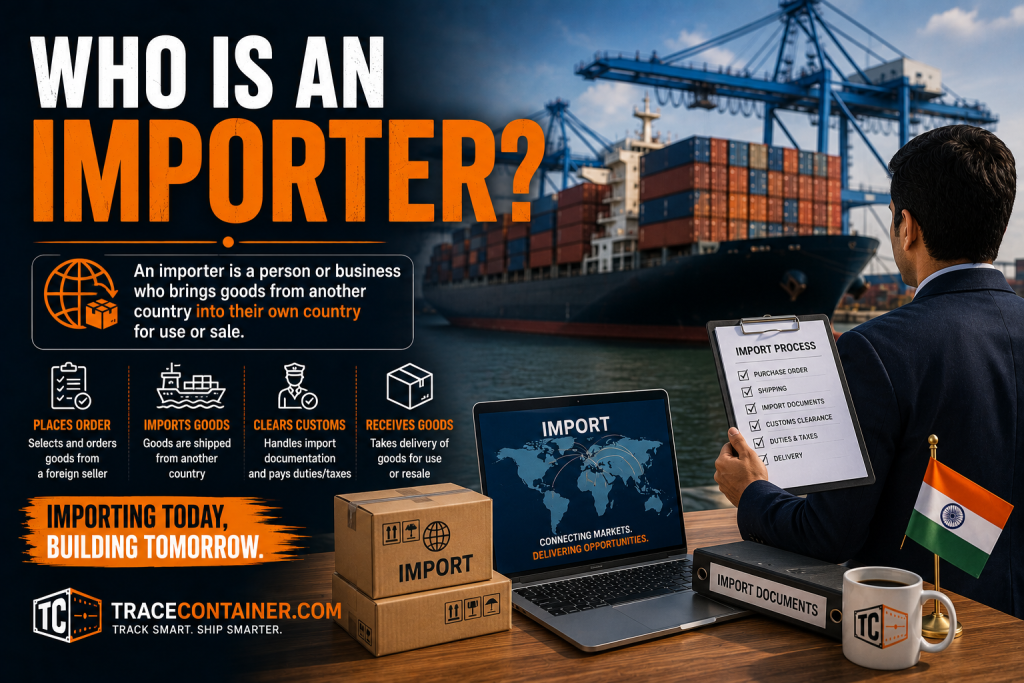
An importer is an individual, company, manufacturer, or trader who purchases goods from another country and brings them into their own country for business or commercial use.
For example:
- A car manufacturer importing engines from Japan.
- A retailer importing electronics from China.
- A pharmaceutical company importing chemicals from Germany.
- A textile company importing fabric from Vietnam.
The importer is legally responsible for ensuring the goods comply with import regulations and that all applicable customs duties and taxes are paid.
The Importer: The Central Coordinator
Many people think a freight forwarder or CHA manages the shipment. In reality, the importer is the central decision-maker, while other parties perform specialized tasks.
The importer appoints different service providers and ensures everyone works together to move the shipment from the supplier’s warehouse to their own.
How Everyone is Connected
                      Overseas Supplier
                             │
                             │
                             ▼
                      📦 IMPORTER
                             │
        ┌────────────────────┼────────────────────┐
        │                    │                    │
        ▼                    ▼                    ▼
 Freight Forwarder     Customs Broker        Bank
      (Logistics)           (CHA/CB)      (Payment/LC)
        │                    │
        ▼                    ▼
 Shipping Line          Indian Customs
  / Airline                   │
        │                    │
        └────────────┬────────┘
                     ▼
              Port / Airport
                     │
                     ▼
             Transport Company
                     │
                     ▼
          Importer's Warehouse
As you can see, the importer sits at the center and coordinates every stage of the shipment.
How an Importer Coordinates with Different Parties
1. Overseas Supplier (Exporter)
The process starts when the importer places a purchase order with the overseas supplier.
Together they agree on:
- Product specifications
- Quantity
- Price
- Payment terms
- Delivery terms (Incoterms)
- Shipping schedule
Once production is complete, the supplier prepares the cargo for export.
2. Freight Forwarder
The importer appoints a Freight Forwarder to manage the transportation.
The freight forwarder:
- Books space with shipping lines or airlines.
- Arranges cargo pickup.
- Plans the shipping route.
- Coordinates transshipment if required.
- Shares shipment updates with the importer.
- Arranges delivery after customs clearance if requested.
The freight forwarder acts as the logistics coordinator for the shipment.
3. Shipping Line or Airline
The shipping line or airline physically transports the cargo.
The importer rarely communicates with the carrier directly because the freight forwarder usually manages bookings, schedules, and shipping instructions.
4. Customs Broker (CHA)
Before the shipment arrives, the importer sends documents to the Customs Broker (formerly known as CHA), including:
- Commercial Invoice
- Packing List
- Bill of Lading or Air Waybill
- Import licenses (if required)
- Certificates and permits
The Customs Broker then:
- Files the Bill of Entry.
- Calculates customs duties.
- Represents the importer before Customs.
- Handles customs examination, if required.
- Obtains customs clearance.
The Customs Broker is the importer’s customs expert, ensuring the shipment complies with all import regulations.
5. Bank
The importer works with their bank to:
- Make international payments.
- Open a Letter of Credit (LC), if required.
- Complete foreign exchange formalities.
6. Transport Company
After customs clearance, the importer arranges transportation from the port, airport, or Container Freight Station (CFS) to their warehouse.
This transport may be arranged directly or through the freight forwarder.
A Real-Life Example
Suppose a company in Mumbai imports machinery from Germany.
Here’s how the process works:
- The Importer places the order with the German supplier.
- The Freight Forwarder arranges pickup and books space on a vessel.
- The Shipping Line transports the container to India.
- Before arrival, the importer sends all documents to the Customs Broker (CHA).
- The CHA files the Bill of Entry and clears the shipment through Customs.
- The cargo is collected from the port and transported to the importer’s warehouse.
Throughout the process, the importer remains the main point of contact and makes all key commercial decisions.
Conclusion
An importer is much more than someone who buys goods from another country. They are the central coordinator of the entire import process, bringing together suppliers, freight forwarders, shipping lines, Customs Brokers, banks, transport companies, and Customs authorities.
While each party has a specific role, it is the importer who ensures everything works together to move goods efficiently from the supplier’s factory to the final destination.