If you’re importing goods from your parent company, subsidiary, or another related business, you may come across the term SVB during customs clearance.
SVB (Special Valuation Branch) is a specialized unit of Customs that verifies whether the declared value of imported goods is fair when the buyer and seller are related. Its purpose is to ensure that the relationship between the two parties has not influenced the price of the goods.
What is SVB?
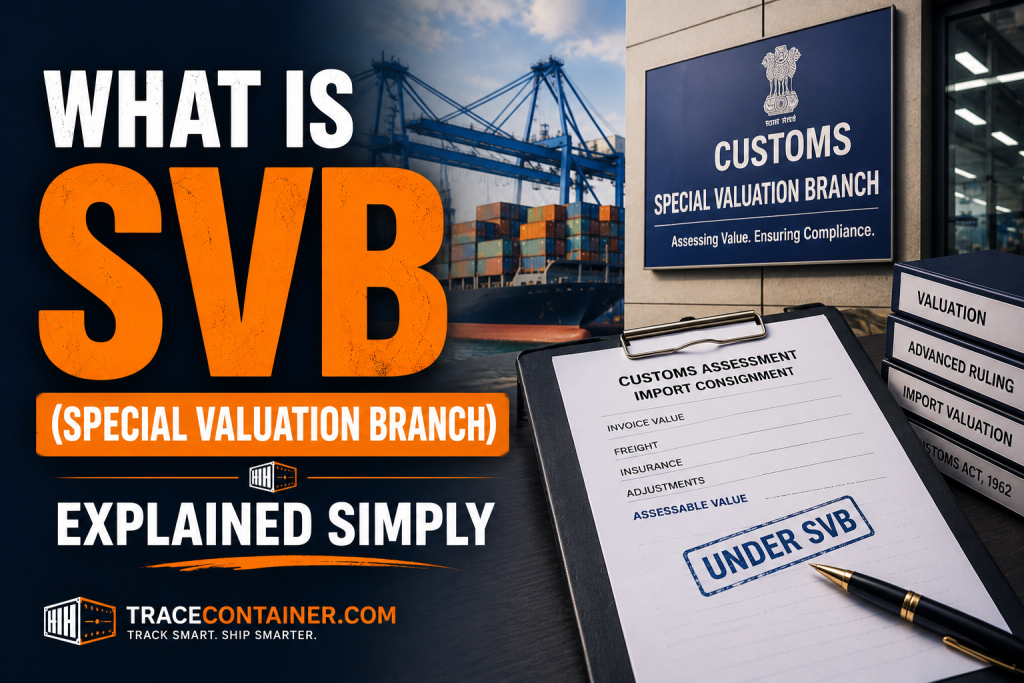
Special Valuation Branch (SVB) is a department within Customs that examines imports involving related-party transactions.
When an importer purchases goods from a company that is related to them—such as a parent company, subsidiary, branch office, or group company—Customs may review the transaction to confirm that the declared import value reflects the actual value of the goods.
The goal is to ensure that the correct customs duty is paid based on a genuine transaction value.
When is SVB Applicable?
SVB is generally applicable when:
- The importer and overseas supplier are related companies.
- The supplier owns part of the importing company (or vice versa).
- Both companies belong to the same corporate group.
- The importer pays royalties, license fees, or technical know-how fees that may affect the value of the imported goods.
- There are agreements between the buyer and seller that could influence the import price.
Simply being related does not automatically mean the declared value will be rejected. Customs only wants to verify that the relationship has not resulted in an artificially low import value.
Why is SVB Important?
Customs duty is calculated based on the assessable value of imported goods.
If related companies declare a lower-than-market price, it could reduce the customs duty payable. SVB helps Customs verify that the declared value is genuine and complies with customs valuation rules.
An SVB review helps:
- Ensure fair customs valuation.
- Prevent undervaluation of imported goods.
- Maintain compliance with customs regulations.
- Avoid future disputes during audits or assessments.
Documents Required for SVB
The exact documents may vary depending on the case, but commonly required documents include:
- Import invoices
- Purchase orders
- Agreement between buyer and seller
- Details of the relationship between both companies
- Royalty or technical collaboration agreements (if applicable)
- Transfer pricing documents (where relevant)
- Completed SVB questionnaire and supporting declarations
Providing complete and accurate information can help speed up the review process.
Does Every Related-Party Import Go to SVB?
Not necessarily.
Customs reviews each case based on the nature of the relationship and the transaction. If additional verification is required, the importer may be asked to provide documents or undergo an SVB examination.
If Customs is satisfied that the relationship has not influenced the price, the declared transaction value may be accepted.
Conclusion
SVB (Special Valuation Branch) plays an important role in ensuring that imports between related companies are valued correctly for customs purposes. It helps Customs verify that the declared import value is genuine and that the appropriate customs duty is paid.
If your business imports goods from a parent company, subsidiary, or another related entity, keeping your agreements, invoices, and supporting documents organized will make the SVB process much smoother and help avoid unnecessary delays during customs clearance.