When goods are transported by sea, they don’t move on their own—they’re carried by a shipping line.
A shipping line is a company that owns or operates cargo ships and transports containers between ports across the world. They are responsible for moving your cargo safely from the port of origin to the port of destination.
If a Freight Forwarder is the company that arranges your shipment, then the Shipping Line is the company that actually carries it.
What is a Shipping Line?
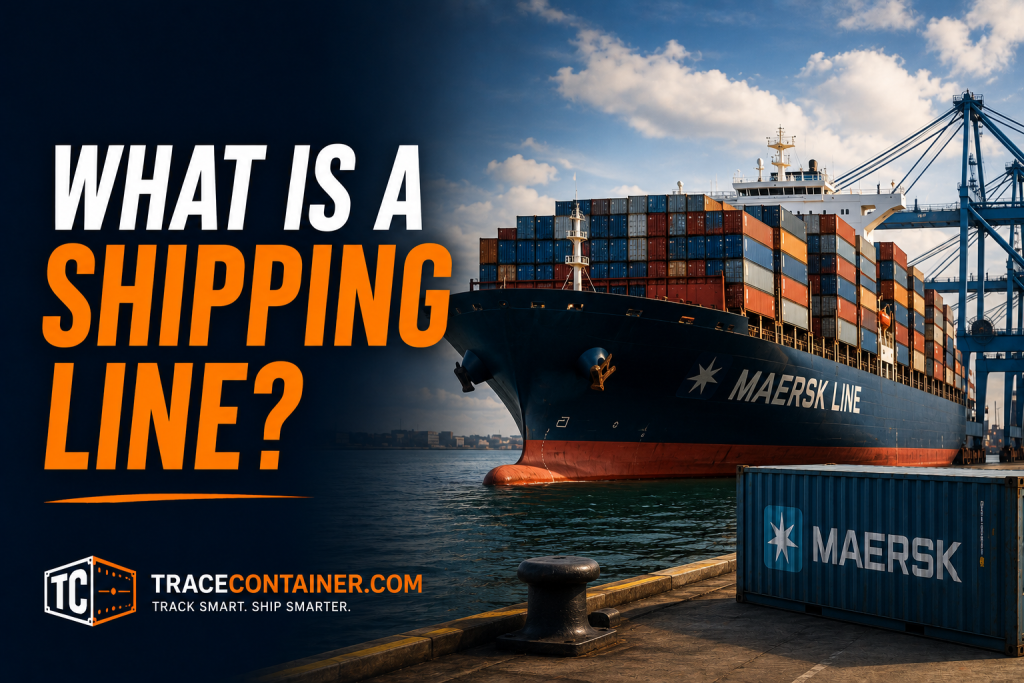
A shipping line, also known as an ocean carrier, is a company that transports cargo by sea using container vessels.
Shipping lines operate scheduled services between ports worldwide and carry millions of containers every year. They own or lease container ships and containers, maintain shipping routes, and publish vessel schedules.
For example, if you’re importing a container from Shanghai to Mumbai, the container may be transported by a shipping line such as MSC, Maersk, or CMA CGM.
What Does a Shipping Line Do?
A shipping line is responsible for much more than just sailing a vessel.
Its responsibilities include:
- Transporting containers between countries.
- Providing empty containers for exporters to load cargo.
- Issuing the Bill of Lading (or authorizing its issuance).
- Operating container vessels on fixed schedules.
- Managing transshipment at intermediate ports.
- Tracking containers during transit.
- Delivering containers to the destination port.
Simply put, the shipping line handles the sea transportation of your cargo.
How Does a Shipping Line Fit into the Import Process?
A shipping line works with several parties throughout the shipment.
                  Exporter
                      │
                      ▼
             Freight Forwarder
                      │
          Books cargo space with
                      │
                      ▼
              🚢 Shipping Line
                      │
         Transports Container by Sea
                      │
                      ▼
              Destination Port
                      │
          Customs Broker (CHA)
                      │
                      ▼
                  Importer
Notice that the importer or exporter usually communicates with the Freight Forwarder, while the Freight Forwarder coordinates with the Shipping Line for bookings, schedules, and shipping instructions.
Track Any shipping lines containers on – TraceContainer.com
Real-Life Example
Imagine a company in Mumbai imports LED televisions from China.
Here’s what happens:
- The Importer places an order with the supplier in Shenzhen.
- The supplier appoints or coordinates with a Freight Forwarder.
- The Freight Forwarder books space with MSC (Mediterranean Shipping Company).
- MSC provides an empty container at the supplier’s warehouse.
- The loaded container is transported to the Port of Shenzhen.
- MSC loads the container onto one of its vessels.
- The vessel sails to Nhava Sheva (JNPT), India.
- After arrival, the container is unloaded, customs clearance is completed, and the importer receives the cargo.
Throughout this journey, MSC is responsible only for transporting the container by sea, while the Freight Forwarder coordinates the overall shipment and the Customs Broker handles customs clearance.
Top Shipping Lines in the World
Some of the world’s largest container shipping lines include:
| Shipping Line | Headquarters |
|---|---|
| Mediterranean Shipping Company (MSC) | Switzerland |
| Maersk | Denmark |
| CMA CGM | France |
| COSCO Shipping Lines | China |
| Hapag-Lloyd | Germany |
| ONE (Ocean Network Express) | Japan |
| Evergreen Marine | Taiwan |
| HMM | South Korea |
| Yang Ming Marine Transport | Taiwan |
| ZIM Integrated Shipping Services | Israel |
| Wan Hai Lines | Taiwan |
These companies operate thousands of vessels and connect hundreds of ports across the globe.
Shipping Line vs Freight Forwarder
Many beginners confuse these two, but their roles are different.
| Shipping Line | Freight Forwarder |
|---|---|
| Owns or operates container vessels | Organizes the shipment |
| Physically transports cargo by sea | Books cargo with shipping lines |
| Issues the Bill of Lading | Coordinates documentation and logistics |
| Operates shipping schedules | Plans the most suitable shipping route |
| Focuses on sea transportation | Manages the entire shipment from origin to destination |
A simple way to remember it is:
- Shipping Line = Carries the container.
- Freight Forwarder = Manages the shipment.
Conclusion
A Shipping Line is the company that transports containers across the world’s oceans. They operate cargo vessels, issue shipping documents, manage container movements, and connect ports around the globe.
While importers and exporters often communicate with a Freight Forwarder, it is the Shipping Line that physically carries the cargo from one country to another. Understanding this distinction makes it much easier to follow how international shipments move through the global supply chain.