If you’ve ever wondered what excise duty is, you’re not alone. It’s a term often used in taxation and manufacturing, but many people confuse it with customs duty or GST.
In simple words, excise duty is a tax levied on goods manufactured within a country. Unlike customs duty, which applies to imported goods, excise duty is charged on certain goods produced domestically.
What is Excise Duty?
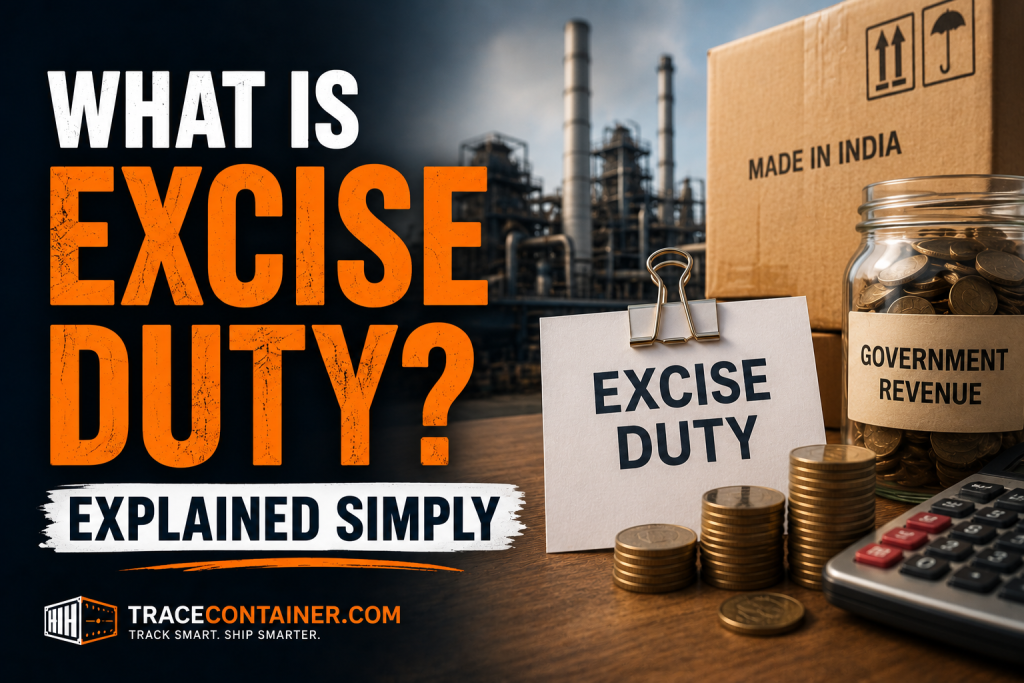
Excise duty is an indirect tax imposed by the government on the manufacture or production of specific goods within the country.
Traditionally, manufacturers were required to pay excise duty before their goods could be sold in the domestic market. The tax was based on the type and value of the goods being manufactured.
Today, in India, most goods are covered under the Goods and Services Tax (GST), which replaced central excise duty for the majority of products.
Excise Duty vs Customs Duty
Although both are government taxes, they apply in different situations.
| Excise Duty | Customs Duty |
|---|---|
| Charged on goods manufactured within the country | Charged on goods imported into the country |
| Paid by the manufacturer | Paid by the importer |
| Applies only to specific goods after GST | Applies to imported goods entering the country |
For example:
- A company manufacturing cigarettes in India may have to pay excise duty.
- A business importing machinery from Germany pays customs duty when the goods arrive in India.
When is Excise Duty Applicable?
Since the introduction of GST in 2017, central excise duty no longer applies to most goods.
However, it is still levied on certain products, including:
- Petroleum products such as petrol and diesel.
- Tobacco and tobacco products.
- Other goods as notified by the government from time to time.
In addition, alcohol for human consumption is not covered under GST and is generally taxed under state excise laws.
Why is Excise Duty Important?
Excise duty serves two important purposes:
- Generates government revenue: Taxes collected help fund public services and infrastructure.
- Regulates the consumption of certain products: Higher excise duties on products like tobacco are often used to discourage excessive consumption while generating revenue.
Because excise duty targets specific goods, it remains an important part of India’s taxation system even after the introduction of GST.
Conclusion
Excise duty is a tax on the manufacture of certain goods within a country. While GST has replaced excise duty for most products in India, it continues to apply to items such as petroleum products and tobacco, and state excise laws govern alcohol for human consumption.
Understanding the difference between excise duty and customs duty is especially important for manufacturers, importers, and anyone involved in logistics or international trade. Knowing which tax applies can help businesses stay compliant and avoid confusion during the movement of goods.