Flat rack containers are specialized shipping units designed for oversized, heavy, or irregular cargo that can’t fit in standard dry containers. They feature a flat base with no sidewalls or roof, plus foldable or fixed end walls, making them perfect for crane or forklift loading.
This design handles out-of-gauge (OOG) loads protruding beyond 2.44m width or 2.59m height, supporting payloads up to 40 tons where regular containers max at 25-30 tons. Ideal for project cargo like machinery or pipes, they cut disassembly costs by 30-50%.
Flat rack container
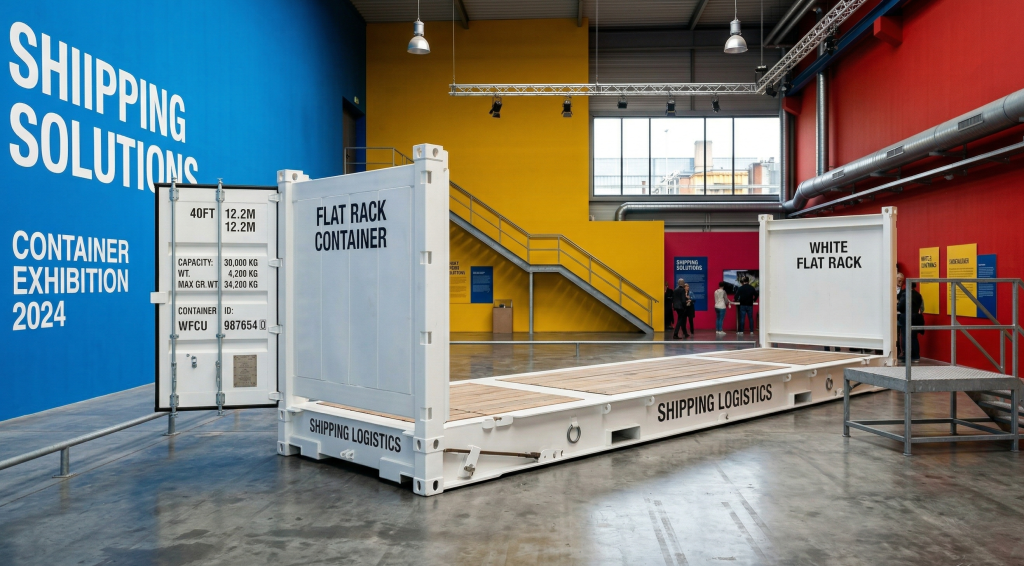
Flat rack containers are specialized shipping units designed for oversized, heavy, or irregular cargo that can’t fit in standard dry containers. They feature a flat base with no sidewalls or roof, plus foldable or fixed end walls, making them perfect for crane or forklift loading.
This design handles out-of-gauge (OOG) loads protruding beyond 2.44m width or 2.59m height, supporting payloads up to 40 tons where regular containers max at 25-30 tons. Ideal for project cargo like machinery or pipes, they cut disassembly costs by 30-50%.
The red flat rack container above shows its open structure with removable end walls, secured amid port standards—perfect for wide industrial loads. Track Any Flat Rack Container
When to Use Flat Rack Containers
Choose flat racks for cargo exceeding standard dimensions: width >2.5m, height >2.6m external, or weights over 30T gross. They’re essential for top/side loading via crane, unlike door-only standard units.
Common triggers include heavy machinery (excavators), vehicles (yachts), or structural steel that needs unobstructed access—saving time on ports like Mumbai’s JNPT where OOG slots are limited. Avoid for uniform boxed goods; use dry vans instead.
India exporters favor them for Middle East routes carrying granite blocks or turbines, where side clearance beats open tops. Global demand spikes 20% during infrastructure booms.
Flat Rack Container Specifications Table
Detailed specs vary by length and type (fixed vs. collapsible ends). Collapsible versions stack higher for empty repositioning efficiency.
Key Notes: Floor strength ~10T/m²; 20+ lashing points (D-rings rated 2-10T). ISO 6346 compliant with corner castings for stacking (9 high loaded).
Lashing and Securing Guide: for flat rack
Proper lashing prevents 80% of in-transit damage. Use EN 12195-1 standards: chains (13-16mm, 10T WLL), web lashings (5T), or steel wire ropes.
Step-by-Step Process:
- Inspect deck for cracks/deformation.
- Position cargo centrally; block/brace with timber (min 100mm thick).
- Lash via 20+ points: 4-8 chains per corner, tension to 500-1000kg force.
- Add edge boards; tarp with battens for weather.
- VGM certify entire unit.
Materials Table:
| Item | Safe Working Load | Quantity per 40ft |
|---|---|---|
| Chain (16mm) | 10T | 16-20 pcs |
| Ratchet Strap | 5T | 8-12 pcs |
| Dunnage Timber | N/A | 2m³ |
Overhang allowed: 1m sides/ends with flags/lights. Pro tip: Torque winches to 150Nm.
Ideal Cargo Types for Flat Racks
Flat racks shine for irregular shapes:
- Heavy Machinery: Excavators (20T), generators, transformers.
- Vehicles & Equipment: Boats/yachts (<12m), mining trucks, bulldozers.
- OOG Project Cargo: Wind blades (50m long, multiple units), pipes (oil/gas), steel coils/beams.
- Industrial: Glass sheets, rail cars, military hardware.
India Examples: Mumbai granite (2.8m wide) to UAE; Hyderabad turbines to Europe. Not for liquids (use tanks) or hazmat without IMDG certs.
Heavy covered objects lashed on this portside flat rack demonstrate securement for ocean transit protection.
Flat Rack vs Open Top Container Comparison
Choose Flat Rack: Side access needed. Open Top: Height priority, side protection. Hybrids exist for both.
Loading Process Step-by-Step
- Prep: Book OOG slot 72hrs ahead; crane availability check.
- Position: Align spreader beam over corner fittings.
- Load: Lower centrally (max 10T/m²); forklift for low items.
- Secure: Lash/block as above; survey photos.
- Seal/VGM: Issue cert, customs docs.
Safety: 2m clearance for overhangs; no stacking loaded units.
This blue flat rack’s foldable walls and wooden deck suit forklift loading of industrial gear.
Cost Factors and Booking Tips
2026 Rates (Asia-Europe): 20ft $3,000-5,000; 40ft $5,500-9,000 (+30% peak). Factors: route, carrier (Maersk/COSCO best availability), insurance (1% cargo value).
Booking: Use INTTRA/Cargowise; 7-14 day lead. Leasing: $150/mo empty.
Common FAQs
- Max dimensions? 12.2m L x 2.5m W x 2.6m H + 1m overhang.
- Collapsible pros? Stack 4-high, 20% repo savings.
- Regulations? SOLAS VGM, CTU Code lashing.
Pro Tips: Pre-lash at origin; track via Trace Container for demurrage avoidance. Internal links: Reefer Guide, Lashing Tools.