Container Damage Claims — Everything You Need to Know
A container damage claim is a formal request made by a cargo owner, freight forwarder, or insurer to a carrier, terminal operator, or third party — seeking financial compensation for loss or damage to goods or equipment that occurred during the shipping process.
Container damage claims are governed by a layered legal framework that includes:
- The Hague-Visby Rules (most ocean shipments globally)
- The Hamburg Rules (adopted by some developing nations)
- The Rotterdam Rules (signed but not yet widely ratified as of 2026)
- The carrier’s Bill of Lading terms and conditions
- The shipper’s cargo insurance policy
- Local port and terminal regulations
Understanding which legal framework applies to your shipment is the first step in any claim — because it determines your time limits, liability caps, and burden of proof.
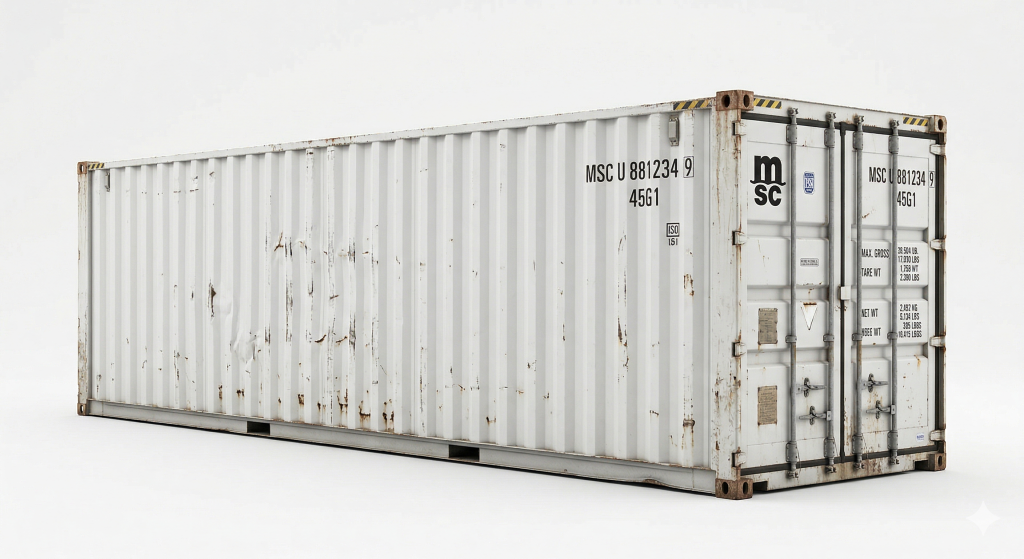
Types of Container Damage — Full Reference Guide
Not all container damage is the same, and the type of damage determines who is liable, what evidence you need, and how much you can recover. Here is the complete reference guide to every major damage category.
Complete Container Damage Type Reference Table
| # | Damage Type | How to Identify | Most Common Cause | Who Is Usually Liable | Avg. Claim Severity |
| 1 | Structural Denting / Deformation | Visible bends, buckles, or dents in walls, roof, or floor panels | Stacking beyond capacity; crane/spreader impact; vessel movement | Terminal operator or carrier | Medium–High |
| 2 | Door Seal Failure / Gasket Damage | Broken, missing, or displaced rubber door seals; moisture ingress | Rough handling; container age; improper closing | Carrier or container lessor | Medium |
| 3 | Floor Damage | Cracked, broken, or missing floor planks; holes; rot | Forklift tine puncture; overloading; water damage | Varies — shipper (overload) or terminal (forklift) | Medium |
| 4 | Roof Puncture / Damage | Holes, bent roof panels, visible sky through roof | Crane handling errors; falling objects at terminal | Terminal operator | Medium–High |
| 5 | Contamination / Residue | Smell, staining, previous cargo residue on walls or floor | Previous cargo not cleaned; cross-contamination | Carrier / container owner | High (food/pharma cargo) |
| 6 | Condensation / Moisture Damage | Water marks on cargo, wet cardboard, mold growth | Temperature differential; inadequate desiccants; door seal failure | Can be shipper (packing), carrier (seal), or act of nature | Medium |
| 7 | Reefer Malfunction | Temperature recorder showing excursions; cargo spoilage | Power failure; equipment fault; improper pre-cooling | Carrier (equipment fault) or port (power interruption) | Very High |
| 8 | Forklift / Handling Damage | Tine holes in walls or floor; impact marks at fork height | Terminal or warehouse forklift mishandling | Terminal operator or shipper (loading) | Medium |
| 9 | Fire Damage | Burn marks, melted cargo, smoke staining | Misdeclared DG cargo; electrical fault | Carrier or shipper (if DG misdeclared) | Very High |
| 10 | Pilferage / Theft | Missing cargo vs. packing list; tampered seals | Broken seals at intermediate ports; insider theft | Carrier (custody liability) | High |
| 11 | Overweight / Overloading Damage | Structural distortion; cracked corner castings | Shipper exceeding maximum payload | Shipper (if overloaded); carrier (if accepted) | High |
| 12 | Seawater / Flooding Damage | Salt residue, corrosion, waterlogging | Hatch cover failure; vessel flooding; container submerged | Carrier / P&I insurer | Very High |
The “Clean” vs “Claused” Bill of Lading — Your First Evidence Point
The condition of the cargo at loading is established by whether the Bill of Lading is clean or claused:
Clean Bill of Lading: The carrier received the goods in “apparent good order and condition.” No damage remarks noted. This is essential for Letter of Credit transactions — and it means that any damage discovered at destination is presumed to have occurred during the carrier’s custody.
Claused (Dirty) Bill of Lading: The carrier has noted a specific reservation about the condition of the goods or container at loading — for example: “One carton wet on loading” or “Container with dent on starboard panel noted.”
A claused BOL shifts the burden of proof — you will need to demonstrate that the specific damage you are claiming was not the pre-existing condition noted by the carrier at loading.
Action point: Always request a copy of the Bill of Lading on the day of loading. If you discover a condition that is not noted and should be, request a Letter of Protest from the carrier before the vessel sails.
The Container Damage Survey Process
The survey is the most critical step in any container damage claim. A poorly conducted survey — or no survey at all — is the single most common reason claims are denied or significantly reduced.
Who Conducts the Survey?
| Surveyor Type | Appointed By | Purpose | When to Use |
| Independent Marine Surveyor | Cargo owner or insurer | Neutral, court-admissible assessment of damage | Always — for any claim above USD 5,000 |
| Carrier’s Surveyor | Shipping line | Carrier’s own assessment — may understate damage | They may appoint one alongside yours |
| P&I Club Correspondent | Carrier’s P&I insurer | Represent carrier’s liability insurer | Typically appointed by carrier on large claims |
| Average Adjuster | Insurer (general average situations) | Calculate contribution in general average events | Only in general average declarations |
| Customs-Appointed Inspector | Government | Verify damage for duty drawback or TIB purposes | When customs duty is involved in the claim |
The 6-Stage Survey Process
Stage 1: Notification — Do This Within 24 Hours
The moment you discover or suspect damage, you must formally notify the carrier in writing. This is not optional — it is a legal requirement under virtually every Bill of Lading regime.
Under Hague-Visby Rules:
- Apparent damage: Notice must be given before or at delivery
- Non-apparent damage: Notice must be given within 3 days of delivery
- Time bar for legal action: 1 year from delivery (or date of delivery)
Under Hamburg Rules:
- Apparent damage: notice at delivery
- Non-apparent damage: within 15 days
- Time bar: 2 years
Practical rule: Give written notice immediately, regardless of which rules apply. Use email with delivery confirmation. Send to the carrier’s local agent AND their claims department.
Stage 2: Instruct an Independent Surveyor — Before Touching Anything
Before any cargo is moved, unloaded, or disposed of, appoint a registered independent marine surveyor. In most jurisdictions, this means a surveyor certified by one of these bodies:
- IIMS — International Institute of Marine Surveying
- RICS — Royal Institution of Chartered Surveyors (for cargo value)
- Lloyd’s Register — for technical structural assessments
- Local nautical institutes — in India: IIMS-accredited surveyors; in UAE: DMT-approved
What to tell the surveyor: The BOL number, container number, port of origin, nature of damage suspected, and any photos already taken.
Stage 3: The Physical Survey
A properly conducted physical survey includes:
External inspection of the container:
- All six panels (four walls, roof, floor) photographed from multiple angles
- Corner castings, door hinges, locking bars, and gaskets inspected and photographed
- CSC plate checked (Container Safety Convention — confirms the container was certified for the type of cargo)
- Tare weight verified against door plate
Seal inspection:
- Original seal number matched against the Bill of Lading
- If seal is intact but cargo is damaged, this is highly significant (rules out theft, points to structural failure or moisture ingress)
- If seal is broken or replaced, document the number discrepancy immediately
Internal inspection:
- Floor condition, walls, roof (looking up for light ingress)
- Any cargo remaining inside, its condition, and position
- Evidence of moisture, condensation, contamination, infestation
Cargo inspection:
- Condition of each package, carton, or unit
- Comparison against packing list
- Weight of damaged vs. total cargo
Stage 4: Temperature and Reefer Records (If Applicable)
For refrigerated cargo claims, the survey must include:
- Download of the temperature data recorder (TDR/USDA recorder) from the reefer unit — this shows the entire temperature history from plug-in to plug-out
- Pre-trip inspection record — confirms the reefer was pre-cooled to the correct set point before loading
- Power log from the terminal — confirms the reefer was connected and powered throughout its stay
- Cargo temperature at loading — if the cargo was not at the correct temperature before stuffing, the carrier’s liability is limited
Stage 5: Survey Report
The surveyor will produce a formal survey report that includes:
- Cause of damage (proximate cause opinion)
- Extent of damage (percentage of cargo affected)
- Salvage value of damaged cargo
- Photographs indexed and referenced
- Recommendations for disposal or reconditioning
- The surveyor’s professional opinion on liability
This report is the backbone of your claim. Do not submit a claim without it.
Stage 6: Joint Survey
If the damage is significant, insist on a joint survey — where both your surveyor and the carrier’s representative inspect the container together. A joint survey report is more difficult for the carrier to dispute than a single-party report.
If the carrier refuses a joint survey: Document this refusal in writing. It can be used against them in dispute proceedings.
H2: Demurrage & Detention in Damage Claims {#dd-liability}
This is one of the most contested areas in container damage claims — and one where cargo owners lose thousands of dollars unnecessarily.
The Core Problem
When a container arrives damaged, it often takes additional time to:
- Complete the survey
- Segregate damaged and undamaged cargo
- Wait for customs inspection (common when damage is declared)
- Arrange disposal of condemned cargo
- Gather documentation before releasing the container
All of this takes time — and the carrier’s demurrage and detention clock is running the entire time.
Can You Claim D&D Costs as Part of Your Damage Claim?
Yes — but only if you can prove the delay was caused by the damage, not by your own logistics.
Under general maritime law and the Hague-Visby Rules, a cargo claimant can recover consequential costs that flow directly from the carrier’s breach. This includes:
- Demurrage accrued while the survey was being conducted
- Detention accrued while damaged cargo was being segregated
- Storage costs for salvaged cargo awaiting disposal instructions
- Re-packing, reconditioning, or re-inspection costs
What you cannot claim: D&D that accrued because you were slow to arrange pickup or customs clearance — the carrier will successfully argue this is your own operational delay.
Best Practice: Request a D&D Hold During Survey
When you notify the carrier of damage, simultaneously request a D&D hold — a written agreement from the carrier to suspend the demurrage and detention clock while the survey is completed.
Many carriers will grant this as a matter of course for confirmed damage situations. Get it in writing. If the carrier refuses, document the refusal and include the D&D costs in your claim as consequential damages.
D&D Liability Matrix for Damage Scenarios
| Scenario | D&D Responsibility |
| Damage discovered on delivery — survey takes 5 days | Include D&D in claim as consequential loss |
| Carrier grants written D&D hold during survey | No D&D liability — hold confirmed in writing |
| Reefer cargo condemned — disposal takes 10 extra days | D&D claimable; document disposal timeline |
| Customs inspection triggered by declared damage | D&D claimable if triggered by carrier-caused damage |
| Shipper delays survey appointment for 7 days | D&D NOT claimable — shipper’s own delay |
| Joint survey delayed by carrier’s failure to attend | D&D claimable — carrier’s breach of process |
H2: Container Damage Claims — Step-by-Step Process {#claims-steps}
[→ See the interactive claims tracker widget embedded below]
The following 10-step process covers every action required from the moment damage is discovered to final settlement. Missing any step — especially the early ones — significantly reduces your recovery.
Step 1 — Discover & Document Immediately
The moment damage is visible or suspected, stop. Do not sign any delivery receipt that says “goods received in good order.” Instead:
- Note exceptions on the delivery receipt: Write exactly what you observe — “Cargo wet on delivery,” “Container dented — survey required,” “Seal broken on arrival”
- Take photos on the spot — before anything is moved (see Evidence section)
- Do not move or dispose of any cargo — doing so destroys evidence
Step 2 — Formal Written Notice to Carrier
Send written notice within the timeframe required by the applicable law (see Survey section). Include:
- Bill of Lading number
- Container number
- Vessel name and voyage
- Date and place of delivery
- Nature of damage observed
- Statement that you reserve all rights
Step 3 — Appoint Independent Marine Surveyor
Contact an IIMS-registered or locally approved surveyor. Provide them with all available documents. They should attend within 24–48 hours of notification.
Step 4 — Secure All Original Documents
Collect and preserve in originals:
- Original Bill of Lading (all copies)
- Commercial invoice
- Packing list
- Insurance certificate / policy
- Certificate of Origin
- Any temperature records (for reefer)
- Booking confirmation and shipping instructions
Step 5 — Request Joint Survey & D&D Hold
Contact the carrier formally to:
- Request joint survey attendance
- Request written suspension of D&D clock
- Confirm the carrier’s claims department contact details
Step 6 — Survey Conducted & Report Issued
Work with your surveyor to ensure the report covers all damage, all potential causes, and includes recommendations. Review the draft before it is finalised.
Step 7 — Assess Quantum (How Much to Claim)
Calculate the total claim value:
- Invoice value of damaged cargo (CIF value for international claims)
- Survey fees
- Reconditioning or disposal costs
- Additional transport or handling costs
- D&D costs caused by the damage event
- Any lost profit (only recoverable in limited circumstances)
Step 8 — Submit Formal Claim Letter
Address the claim letter to the carrier’s claims department. Include:
- Full claim amount with breakdown
- All supporting documents (indexed)
- Survey report
- Time limit reservation (state you reserve all legal rights)
- Request for response within 30 days
Step 9 — Carrier Assessment & Negotiation
The carrier will review your claim and either:
- Accept and settle
- Make a counter-offer (partial payment)
- Reject the claim with reasons
Most claims are settled in negotiation. If the carrier’s counter-offer is unreasonable, escalate to their P&I Club or initiate legal proceedings.
Step 10 — Settlement, Arbitration, or Legal Action
If negotiation fails:
- Arbitration: Many BOL terms require London, Singapore, or New York arbitration
- Legal action: Must be within the time bar (1 year under Hague-Visby; 2 years under Hamburg)
- P&I Club: Contact the carrier’s P&I Club directly if the carrier is unresponsive
Evidence — What You Must Collect {#evidence}
[→ See the interactive evidence checklist widget below]
A damage claim is only as strong as its evidence. Carriers and their insurers employ experienced professionals to find weaknesses in claim documentation. Here is the complete evidence package you need.
Primary Evidence — Mandatory
1. Photographs (timestamped)
- Container exterior — all four sides, roof (if accessible), and undercarriage
- Container number and CSC plate (prove which container)
- Seal condition (intact/broken/replaced) — close-up
- Door seals and gaskets
- All damage — from multiple distances (wide for context, close for detail)
- Cargo condition inside the container
- Individual damaged items/packages
- Any markings on cargo compared against packing list labels
Photography rule: Take at least 3 shots of every significant damage point — one wide, one medium, one close-up. Ensure your phone’s timestamp and location data are enabled.
2. Survey Report The independent surveyor’s report. Must include cause opinion, damage extent, and photographs indexed to the report.
3. Original Bill of Lading Proves the contract of carriage and the declared condition of goods at loading.
4. Commercial Invoice Establishes the value of the cargo for quantum purposes. The claim is calculated on CIF value (Cost + Insurance + Freight) for international shipments.
5. Packing List Cross-references with damaged goods to calculate percentage affected.
6. Insurance Certificate / Open Cover Policy Proves your insurable interest and the policy terms.
Secondary Evidence — Highly Recommended
7. Delivery Receipt with Exceptions Noted The single most powerful piece of evidence for transit damage. If you signed a clean receipt, you will face challenges proving the damage occurred in the carrier’s custody.
8. Temperature Records (Reefer Claims) TDR data download, pre-trip report, and power logs.
9. Reconditioning Quotes or Invoices If cargo was reconditioned (re-packed, dried, treated), preserve all invoices. These are claimable costs.
10. Disposal Records For condemned cargo, a destruction certificate or waste disposal manifest proves the cargo had zero salvage value.
11. Letter of Protest If damage was suspected at loading, a Letter of Protest filed with the carrier establishes the condition issue from day one.
12. Expert Witness Statement For complex damage (mold growth, chemical contamination, structural failure), a specialist expert report strengthens the surveyor’s opinion on causation.
Digital Evidence Best Practices
- Back up all photos to a cloud service immediately — never rely on a single device
- Use a separate folder named with the BOL/container number for every claim
- Export WhatsApp/email chains with carriers and surveyors as PDF — these are admissible correspondence evidence
- Screenshot carrier portal entries showing Last Free Day, status updates, and any system errors
- Preserve original file metadata — courts can verify that photos were not edited after the fact
H3: Claim Payouts — How Much Can You Recover?
This is the question every cargo owner asks first — and the answer is more nuanced than most people expect.
The Liability Cap Problem
Under the Hague-Visby Rules, carriers can limit their liability to:
666.67 SDR per package OR 2 SDR per kilogram of gross weight — whichever is higher.
An SDR (Special Drawing Right) is the IMF’s unit of account. As of 2026, 1 SDR ≈ USD 1.34. This means:
- Per package limit: 666.67 × $1.34 ≈ $893 per package
- Per kg limit: 2 × $1.34 = $2.68 per kg
For a 20ft container loaded with 15,000 kg of electronics:
- Per package calculation: depends on how many “packages” are declared on the BOL
- Per kg calculation: 15,000 × $2.68 = $40,200 maximum liability
If the electronics are worth $500,000, the carrier’s liability under Hague-Visby is capped at $40,200 — about 8% of the cargo value. This is why cargo insurance is not optional.
How to Break the Liability Cap
There are three ways to recover above the Hague-Visby cap:
1. Declared Value (Ad Valorem) If you declare the value of the cargo on the Bill of Lading and pay a higher freight rate accordingly, the carrier’s liability is raised to the declared value. Most carriers offer this but at significantly higher freight rates. Always calculate whether the freight surcharge is less than the insurance premium savings.
2. Prove Carrier’s Reckless Act or Fraud Under Hague-Visby Article IV bis, the liability cap can be broken if you prove the damage resulted from the carrier’s “act or omission done with intent to cause damage, or recklessly and with knowledge that damage would probably result.” This is a high legal threshold but not impossible — particularly in cases of fire from misdeclared dangerous goods.
3. Your Cargo Insurance Policy The most practical solution. A properly arranged all-risk cargo insurance policy (Institute Cargo Clauses A) covers the full CIF value of the cargo, regardless of carrier liability caps. Your insurer pays you in full and then pursues the carrier through subrogation.
Typical Payout Ranges by Claim Type
| Damage Type | Carrier Liability (Hague-Visby) | Insurance Payout (ICC-A Policy) |
| Structural damage — partial cargo loss | Limited to SDR cap | Full CIF value of damaged portion |
| Reefer malfunction — full cargo loss | Limited to SDR cap | Full CIF value |
| Contamination — full cargo condemned | Limited to SDR cap | Full CIF value |
| Pilferage — 30% cargo missing | Per-package SDR cap | Full CIF of missing portion |
| Fire damage (carrier fault) | Cap may be broken if proven reckless | Full CIF value |
| Moisture damage — partial | Per-package or per-kg cap | Partial payment after deductible |
| Seawater flooding | Limited unless general average | Full CIF if GA declared |
Survey & Legal Costs — Are They Recoverable?
Survey fees: Generally recoverable as part of the claim if the carrier is found liable. Include them explicitly in your claim letter as a separate line item.
Legal costs: Recoverable if the claim goes to court and you win, subject to the court’s discretion on costs. Arbitration costs are split more variably.
D&D costs: Recoverable as consequential loss if directly caused by the damage event and documented (see D&D section).
Pro Tips for Maximum Claim Recovery {#tips}
These are the tactics that experienced cargo claims professionals use to consistently recover more — and faster.
Tip 1: Never Sign a Clean Delivery Receipt for Damaged Cargo This is the most common and most costly mistake. Once you sign “received in good order,” the carrier has a powerful argument that the damage occurred after delivery. Always note your exceptions on the delivery document, no matter how much the truck driver or terminal agent pressures you.
Tip 2: Photograph the Seal Before Breaking It The seal condition on delivery is critical evidence. A tampered or replaced seal is evidence of pilferage or interference during transit. An intact seal with internal damage points to structural or moisture causes. Document the seal number, its condition, and the number on the BOL — photograph all three together.
Tip 3: Keep Damaged Samples Even after disposal or condemnation of damaged cargo, retain physical samples from multiple cartons. A carrier’s surveyor may dispute the extent of contamination or damage — physical samples let your expert independently verify the condition.
Tip 4: Appoint Your Surveyor Before Notifying the Carrier Carriers can move quickly to inspect and minimise documented damage when they know a claim is coming. Have your surveyor on standby so that the joint inspection happens on your timeline — with your surveyor already briefed and present.
Tip 5: Always Claim the Full CIF Value — Not Just Invoice Your cargo insurance claim and carrier claim should both be based on CIF value (Cost + Insurance + Freight), which is typically 10% higher than the commercial invoice value under ICC convention. Many claimants only use the invoice value and leave money on the table.
Tip 6: Pursue Both the Carrier AND the Terminal Carriers often point to the terminal as responsible for damage that occurred during handling. Terminals often point back to the carrier. File notices against both parties simultaneously to preserve your legal rights against each. You can sort out who is ultimately liable later — but if you only notify one party and the time bar expires, your claim against the other is lost.
Tip 7: Use Your Insurer — Then Let Them Subrogate Many cargo owners hesitate to make insurance claims for fear of premium increases. For significant claims (above USD 10,000), this calculation is almost always wrong. File with your insurer, get paid quickly, and let the insurer pursue the carrier through subrogation with their legal team — that’s what the premium pays for.
Tip 8: Document Your Loss of Use / Consequential Loss from Day One If the damaged cargo was for a time-sensitive production run, retail season, or contractual delivery, document the business impact immediately. While consequential loss is difficult to recover from carriers under Hague-Visby, it may be recoverable under your insurance policy (if you have consequential loss extension) or in arbitration if carrier fault is proven.
Tip 9: Know Your Time Bar — Calendar It on Day One The 1-year Hague-Visby time bar (or 2 years under Hamburg Rules) runs from the date of delivery of the goods. Calendar this date the moment you receive delivery. Missing the time bar means your claim is extinguished — permanently — regardless of how strong your case is.
Tip 10: Get Everything in Writing — Including Verbal Agreements Any agreement with the carrier’s agent — a D&D hold, a joint survey date, an acknowledgment of damage — must be followed up in writing. “But we agreed on the phone” has no legal standing. Email is sufficient. WhatsApp messages with timestamps are increasingly accepted in evidence.
All information accurate as of 2026. Container damage claims involve complex legal questions — always consult a qualified maritime lawyer or P&I Club correspondent for advice on specific claims. Time limits are strict and vary by jurisdiction.