If you deal with imports into India, you’ve heard the term “Bill of Entry” more times than you can count. It’s one of the most important documents in the entire import process.
But here’s something a lot of people don’t think about: when you file it matters just as much as what’s in it. Filing at the right time can save you days of waiting and real money in storage costs.
There are three main types of Bill of Entry filing, and the difference between them all comes down to timing. Let’s go through each one, in plain and simple terms.
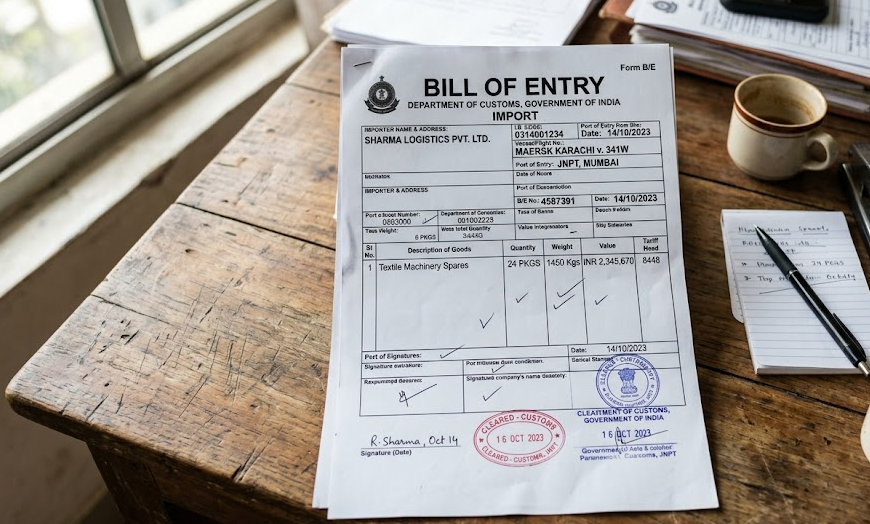
First, What Is a Bill of Entry?
A Bill of Entry is a document that an importer (or their customs broker) files with Indian Customs on ICEGATE. It tells Customs exactly what’s being imported, its value, and other details Customs needs in order to calculate duty and approve the goods for release.
Now let’s look at when you can actually file it.
1. Advance
This is filed before the ship even reaches the Indian port — sometimes days, or even weeks, ahead of time. It can even be filed before the ship’s official cargo list (called the IGM, or Import General Manifest) has been submitted.
Filing this early means Customs can start going through your paperwork right away, well before your cargo lands. By the time the ship actually arrives, a lot of the work is already done.
Simply put: you’re getting a head start before anything else has even happened.
2. Prior
This is filed a little later than an Advance Bill of Entry — after the shipping line has submitted the IGM (the ship’s cargo list), but before the ship actually reaches the port and docks.
So what’s the real difference between the two? An Advance Bill of Entry is filed before the IGM is in the system. A Prior Bill of Entry is filed after the IGM is in, but before the ship arrives.
Simply put: the cargo list is filed, the ship’s still on its way — and you’re already moving the paperwork forward.
3. Normal
This is filed after the ship has arrived and the cargo is sitting at the port, ready for clearance.
It’s the traditional, default way of filing. Nothing has been done ahead of time, so this route usually takes the longest to clear compared to the other two.
Simply put: you wait for the cargo to land, then start the paperwork.
Why Does This Matter?
Here’s the takeaway: the earlier you file a complete and accurate Bill of Entry, the sooner Customs can start processing it.
That means:
- Faster clearance once your cargo actually arrives
- Less time your cargo spends sitting at the port
- Lower storage and demurrage costs (the extra fees charged for keeping cargo at the port too long)
If you handle imports regularly, filing early and filing accurately is one of the simplest ways to keep your cargo moving and your costs down.