Demurrage vs Detention — What’s the Real Difference?
These two words are used interchangeably by beginners — and incorrectly billed even by experienced carriers. Understanding the distinction can literally save you thousands of dollars per shipment.
Here is the simplest way to remember it:
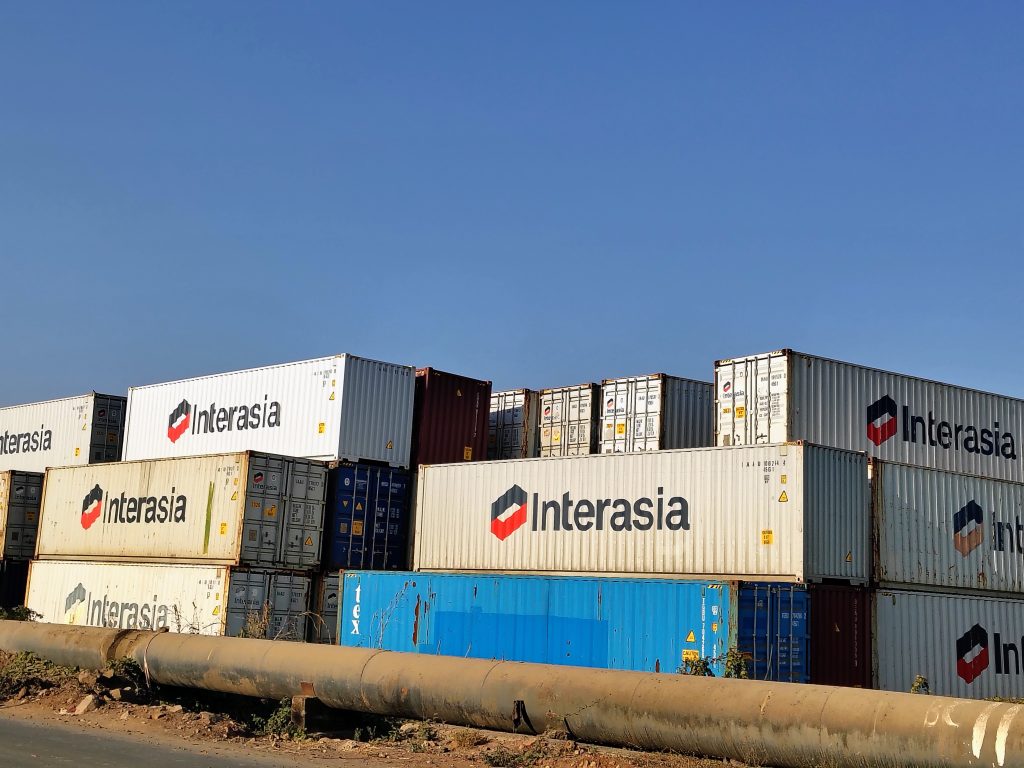
Demurrage = the container is still inside the port/terminal. Detention = the container has left the port but hasn’t been returned to the depot.
Both charge you for using the carrier’s equipment longer than the agreed free period. But they are separate charges, governed by separate rules, and calculated differently.
CFS
The Complete Demurrage vs Detention Comparison Table
| Factor | Demurrage | Detention |
|---|---|---|
| Where the container is | Inside the port terminal | Outside the port (at your warehouse, factory, CFS) |
| Who controls the clock | Port/Terminal Operator + Carrier | Carrier only |
| What triggers it | Container not picked up within free days | Container not returned empty within free days |
| Who charges it | Shipping line (sometimes terminal separately) | Shipping line |
| Typical free days | 3–7 days (import); 5–10 days (export) | 3–7 days (after pickup) |
| Charged on | Import AND export | Primarily import (empty return) |
| Average daily rate | $75–$250/day (TEU) | $50–$200/day (TEU) |
| Combined term | “D&D” — Demurrage and Detention | “D&D” — Demurrage and Detention |
| Who to negotiate with | Carrier’s customer service / documentation team | Carrier’s customer service / documentation team |
| Port congestion impact | High — terminal delays directly add to demurrage | Low — once out of port, you control the timeline |
What Are “Free Days”?
Free days are the number of calendar days a shipping line gives you to pick up your container (demurrage) or return the empty container (detention) without incurring any charges.
Free days are granted by the shipping line as part of your freight contract. They start counting from a specific trigger event — and that trigger matters enormously.
Demurrage Free Day Clock — When Does It Start?
| Scenario | Clock Starts |
|---|---|
| Standard import | The day after the vessel discharges at the terminal (Last Free Day = Last Free Day on Carrier’s System) |
| Transshipment cargo | Day after final discharge at destination port |
| LCL (groupage) shipment | Day cargo is available at the CFS (Container Freight Station), not the vessel arrival date |
| Customs-held cargo | Varies by carrier — some pause the clock; most DO NOT |
| Port congestion delays | Most carriers do NOT automatically pause the clock — must be claimed |
Detention Free Day Clock — When Does It Start?
| Scenario | Clock Starts |
|---|---|
| Standard import | Day after gate-out from terminal (container leaves port) |
| Combined D&D agreements | Single pool of free days shared between demurrage and detention |
| Export | Day after gate-in of empty container to the port/CFS |
Typical Free Days by Trade Lane
| Trade Lane | Demurrage Free Days | Detention Free Days |
|---|---|---|
| Asia → Europe (FCL) | 5–7 days | 5–7 days |
| Asia → US West Coast | 4–5 days | 5–7 days |
| Asia → US East Coast | 5–7 days | 7–10 days |
| Intra-Asia | 3–5 days | 3–5 days |
| Asia → India (FCL) | 3–5 days | 3–5 days |
| Europe → Americas | 5–7 days | 7–10 days |
| Short-sea (Europe) | 3–5 days | 3–5 days |
Beginner Tip: Free days are negotiable — especially if you have volume. Always ask your freight forwarder or carrier sales rep for extended free days before you book, not after your cargo has arrived.
Demurrage Fee Calculation — With Real Examples
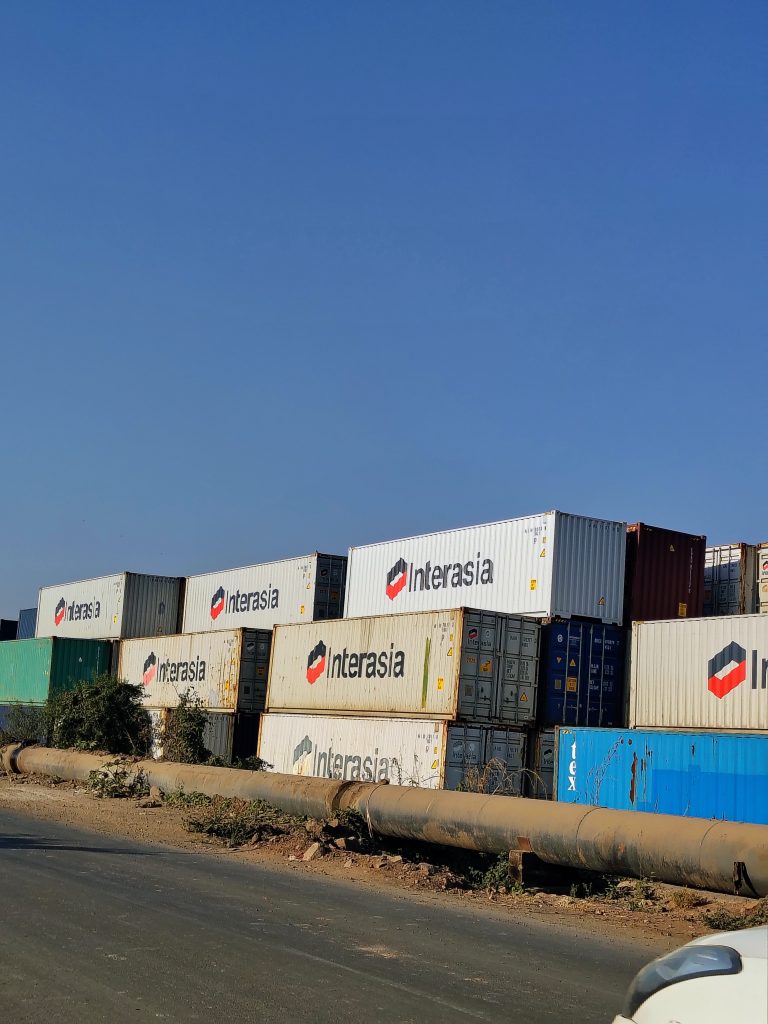
Understanding the math is the first step to understanding why demurrage invoices can spiral so quickly. Most shipping lines use a tiered pricing structure — the longer the delay, the higher the daily rate.
Standard Tier Structure
| Tier | Days Over Free Period | Daily Rate (20ft/TEU) | Daily Rate (40ft/FEU) |
|---|---|---|---|
| Tier 1 | Day 1–3 over free period | $75–$100 | $150–$200 |
| Tier 2 | Day 4–6 over free period | $100–$150 | $200–$300 |
| Tier 3 | Day 7+ over free period | $150–$250+ | $300–$500+ |
Calculation Example 1 — Simple Single Tier
Scenario: A 20ft container arrives at JNPT (Mumbai). The carrier grants 5 free days. The importer picks up the container on Day 11 after vessel discharge.
Free days allowed:        5 days     → $0
Days over free period:    6 days     → charged

Tier 1 (Days 6–8):    3 days × $100 = $300
Tier 2 (Days 9–11):   3 days × $150 = $450

Total Demurrage:                       $750
Calculation Example 2 — Combined D&D
Scenario: A 40ft container arrives at LA/LB (US West Coast). The carrier grants 4 demurrage free days and 7 detention free days. The container is picked up on Day 6 and returned empty on Day 16.
DEMURRAGE:
Free days:              4 days  → $0
Days over:              2 days  → charged
Tier 1 (Days 5–6):  2 × $200   = $400

DETENTION:
Free days (after pickup):    7 days  → $0
Days over:                   3 days  → charged
Tier 1 (Days 8–10):      3 × $175   = $525

Total D&D Invoice:                    $925
Calculation Example 3 — Port Congestion Scenario
Scenario: A shipper’s cargo arrives at Felixstowe (UK) but the terminal is congested. The container cannot be collected for 12 days. The carrier grants 5 free days and does not grant a congestion waiver.
Days at terminal:       12 days
Free days:               5 days  → $0
Billable days:           7 days

Tier 1 (Days 6–8):   3 × $120  = $360
Tier 2 (Days 9–12):  4 × $180  = $720

Total Demurrage:                  $1,080

→ Waiver Claim Filed: Congestion documentation submitted
→ Carrier granted 4 days waiver = $360 + partial Tier 2 waived
→ Final invoice after waiver:     $480
Carrier-Specific Rules — Maersk & MSC Deep Dive
Maersk Demurrage & Detention Rules (2026)
| Parameter | Maersk Rule |
|---|---|
| Free day basis | Calendar days (including weekends and public holidays) |
| Demurrage clock trigger | 00:01 on the day after “Available for Pickup” notification |
| Detention clock trigger | 00:01 on the day after gate-out from terminal |
| Invoice frequency | Per B/L, invoiced after container returned |
| Online dispute portal | Maersk.com → Customer Support → D&D Dispute |
| Waiver eligibility | Port congestion, customs delays with documentation, force majeure |
| Standard TEU demurrage (Asia–EU) | Tier 1: $75/day; Tier 2: $125/day; Tier 3: $200/day |
| Standard FEU demurrage (Asia–EU) | Tier 1: $150/day; Tier 2: $250/day; Tier 3: $400/day |
| Combined D&D option | Available on request — single free day pool |
| Extended free days | Available via Maersk Flow or spot rate negotiation |
MSC Demurrage & Detention Rules (2026)
| Parameter | MSC Rule |
|---|---|
| Free day basis | Calendar days |
| Demurrage clock trigger | Day after “Last Free Day” shown in MSC portal |
| Detention clock trigger | Day after gate-out (per terminal system timestamp) |
| Invoice frequency | Weekly billing cycle; some trades per-event |
| Online dispute portal | MSC.com → MyMSC → Invoices → Raise Dispute |
| Waiver eligibility | Customs exam, port congestion, carrier equipment failure |
| Standard TEU demurrage (Asia–US) | Tier 1: $100/day; Tier 2: $150/day; Tier 3: $250/day |
| Standard FEU demurrage (Asia–US) | Tier 1: $200/day; Tier 2: $300/day; Tier 3: $500/day |
| Combined D&D option | Available on major trade lanes |
| Extended free days | Negotiable for BCOs (Beneficial Cargo Owners) with volume |
Important: These rates are indicative for 2026 based on publicly available carrier tariffs. Actual rates vary by trade lane, contract type, and cargo. Always refer to the official carrier tariff or your service contract for confirmed rates.
10 Proven Strategies to Avoid Demurrage
These are the tactics used by experienced freight forwarders, customs brokers, and logistics managers to consistently avoid demurrage charges — even in congested ports.
Strategy 1: Negotiate Free Days Before Booking — Not After The only time you have real negotiating power is before you give the carrier your freight. Once cargo is moving, your leverage is gone. Always ask for extended free days — 7, 10, or even 14 — especially if your cargo regularly moves through congested ports or requires complex customs clearance.
Strategy 2: Align Your Customs Broker Before the Vessel Arrives The most common reason demurrage accrues is that customs paperwork isn’t ready when the cargo arrives. Pre-file your customs entry (where allowed), get your permits and licenses in order, and brief your broker on the ETA at least 10 days before arrival.
Strategy 3: Track the Vessel from Day One Don’t wait for the arrival notice from your forwarder. Use TraceContainer.com to monitor vessel progress in real time. If the vessel is early — which happens frequently — your free days start counting before you even knew the ship arrived.
Strategy 4: Request “Available for Pickup” Notifications from the Carrier This is the event that triggers the demurrage clock on most carriers. Subscribe to carrier notifications and set up tracking alerts. The sooner you know the container is available, the sooner you can act.
Strategy 5: Use a Pre-Arrival Customs Entry (Where Permitted) In the US, the ACE system allows you to file an import entry up to 15 days before vessel arrival. In India, you can file a prior Bill of Entry up to 30 days before estimated arrival. Filing early means your clearance can be granted the moment the cargo discharges.
Strategy 6: Choose Transload or CFS Over Direct FCL (When Appropriate) For high-value, time-sensitive cargo, consider transloading at a Container Freight Station near the port. Your container is de-stuffed quickly at the CFS (resetting certain timing obligations), and you receive your goods in smaller lots without needing to clear and return an FCL container.
Strategy 7: Build a Buffer Into Your Delivery Schedule Never plan for just-in-time delivery on an ocean shipment. Port congestion, weather delays, vessel rollovers, and customs holds are all common. Plan for your free days to be used entirely and build operations around an 8–10 day clearance timeline regardless of how many free days you have.
Strategy 8: Understand Exactly When the Clock Starts — Per Carrier This sounds basic, but dozens of importers get caught because they assumed the clock starts at vessel arrival when it actually starts at “available for pickup” — which can be 1–3 days later. Log into the carrier portal on arrival day and check the system-confirmed Last Free Day.
Strategy 9: Maintain a Relationship with the Carrier’s Local CS Team A relationship with your carrier’s local customer service or documentation team is one of the most underrated tools in logistics. Carriers are often willing to grant informal short-term extensions or waiver consideration to established customers who communicate proactively.
Strategy 10: Document Everything — Always Every customs delay letter, every port congestion advisory, every terminal system outage — save it all. Documentation is what turns a denied waiver into an approved one. Create a paper trail from the moment cargo arrives until the container is returned.
How to File a Demurrage Waiver Claim
A waiver claim is a formal request to the shipping line to cancel or reduce demurrage charges due to circumstances outside your control. Here is the step-by-step process.
Waiver Claim Process Flowchart
DEMURRAGE INVOICE RECEIVED
           │
           ▼
┌─────────────────────────────┐
│ STEP 1: Verify the Invoice  │
│ Check: dates, free days,    │
│ tier rates, container nos.  │
└────────────┬────────────────┘
             │ Is the calculation correct?
             ├──── YES ──► Was delay in your control?
             │                    │
             │              YES ──► PAY THE INVOICE
             │              NO  ──► Proceed to Step 2
             │
             └──── NO ──► Dispute the math first (Step 2a)
                          Then continue waiver claim

┌─────────────────────────────┐
│ STEP 2: Identify Grounds    │
│ Valid grounds for waiver:   │
│ • Port/terminal congestion  │
│ • Customs examination hold  │
│ • Carrier equipment failure │
│ • Force majeure event       │
│ • Incorrect LFD in system   │
│ • Carrier-caused delay      │
└────────────┬────────────────┘
             │
             ▼
┌─────────────────────────────┐
│ STEP 3: Gather Documentation│
│ Required docs:              │
│ • Terminal congestion notice│
│ • Customs hold letter/exam  │
│ • Port advisory / notice    │
│ • Your tracking screenshots │
│ • Gate-out / gate-in stamps │
│ • Correspondence with broker│
└────────────┬────────────────┘
             │
             ▼
┌─────────────────────────────┐
│ STEP 4: Submit Waiver Claim │
│ Via carrier's online portal │
│ (Maersk, MSC, CMA CGM etc.) │
│ Include: BOL No., Container │
│ No., Invoice No., all docs  │
└────────────┬────────────────┘
             │
             ▼
┌─────────────────────────────┐
│ STEP 5: Follow Up           │
│ Carriers: 5–15 business days│
│ response time. Follow up at │
│ Day 7 if no acknowledgment  │
└────────────┬────────────────┘
             │
        ┌────┴─────┐
        │          │
   APPROVED    REJECTED
        │          │
  Pay reduced  Request
  amount or    escalation
  $0 invoice   to senior CS
                   │
              Still denied?
                   │
              Small Claims /
              FIATA arbitration
              / Legal review
What to Write in Your Waiver Email / Portal Submission
Subject line format: WAIVER REQUEST — BOL# [XXXXXX] — Container [XXXX123456] — [Port Name]
Body structure:
- Opening: State the invoice number, amount, and the specific containers involved
- Timeline: Provide a clear chronological summary — when vessel arrived, when cargo was available, what delay occurred and why, when container was picked up/returned
- Grounds: Clearly state the specific reason the charges should be waived (e.g., “Port congestion at JNPT prevented pickup — see attached Terminal Advisory dated [date]”)
- Request: State exactly what you are requesting (full waiver, partial waiver, or conversion to a lower tier)
- Attachments: List every document attached
H3: 2026 Demurrage Rate Updates {#rates}
The demurrage and detention landscape shifted significantly entering 2026. Here’s what has changed and what to watch.
Key Rate Trends in 2026
| Factor | 2024–25 Status | 2026 Update |
|---|---|---|
| US West Coast rates | Elevated post-labor disputes | Stabilized; Tier 1 avg. $100–125/TEU |
| US East Coast rates | Spiked during port disruptions | Normalizing; avg. $90–115/TEU |
| EU/North Europe | Moderate; Felixstowe/Rotterdam congestion | Reduced; avg. $80–110/TEU |
| India (JNPT/Mundra) | High; infrastructure constraints | Infrastructure investment reducing delays; avg. ₹5,000–8,000/TEU/day |
| Middle East (Jebel Ali) | Moderate and stable | Stable; avg. $85–115/TEU |
| Southeast Asia (Singapore/PTP) | Low due to efficient terminals | Still low; avg. $60–90/TEU |
| China origins (transshipment) | Unpredictable; COVID-era volatility easing | Stable; avg. $70–100/TEU |
| FMC regulation (US) | Ocean Shipping Reform Act 2022 in effect | Carriers required to publish D&D rules; enforcement increasing |
FMC Demurrage Rules — US Importers Take Note
The Federal Maritime Commission (FMC) in the United States has continued to enforce stricter rules on carrier D&D billing under the Ocean Shipping Reform Act (OSRA) 2022. In 2026, key FMC-enforced requirements include:
- Carriers must publish demurrage and detention schedules on their public websites
- Carriers must invoice D&D per billing cycle and cannot retroactively apply charges beyond 30 days after the invoice event
- Carriers cannot charge demurrage during periods when the terminal was inaccessible due to carrier or terminal fault
- Shippers have the right to dispute and have disputes reviewed within a defined timeline
Implication for US importers: If you’re being charged demurrage for days when the terminal gate was closed or the carrier’s own system showed the container as unavailable for pickup, you have a stronger legal basis to dispute the charge than ever before in 2026.
H2: Real Case Studies — Demurrage in Practice {#case-studies}
🖼️ Image Suggestion #5 — Case Study Visual
- Visual: Three side-by-side “case file” style cards, each with a country flag, cargo icon, and outcome badge (e.g., “WAIVED,” “PAID,” “REDUCED”)
- Alt Text:
"Three demurrage case study cards showing real-world shipping scenarios with outcomes ranging from full waiver to partial reduction" - Placement: At the top of this section
Case Study 1 — The Customs Exam That Cost $4,200
Shipper: Electronics importer, US
Route: Shenzhen → Los Angeles
Carrier: One of the top 5 global shipping lines
Container: 1 × 40ft (FEU)
Free Days: 4 demurrage + 7 detention
What happened: The container arrived at the LA/LB port and was placed on hold for US Customs examination (VACIS scan + physical exam). The examination took 9 days. By the time the hold was released, 9 demurrage days had accrued at Tier 1 and Tier 2 rates.
Invoice breakdown:
Demurrage Days 5–7 (Tier 1):   3 × $200 = $600
Demurrage Days 8–13 (Tier 2):  6 × $300 = $1,800
Detention Days 8–10 (Tier 1):  3 × $150 = $450 (after late pickup)
Subtotal:                               = $2,850
Waiver claim filed: Customs exam hold documentation submitted to carrier within 48 hours of invoice receipt.
Outcome: Carrier granted full waiver on the 9 demurrage days (customs holds are an accepted ground). Detention charges of $450 were upheld as the importer delayed pickup 3 days after customs released the hold.
Lesson: Get your customs hold documents immediately. The carrier waived $2,400. The remaining $450 was avoidable — act the moment customs releases the cargo.
Case Study 2 — JNPT Congestion: ₹1.8 Lakh Invoice
Importer: Machinery parts importer, Mumbai, India
Route: Busan, South Korea → JNPT (Nhava Sheva)
Carrier: Asian carrier operating Asia–India trade lane
Container: 2 × 20ft (TEU)
Free Days: 3 days demurrage (standard JNPT terms)
What happened: The vessel arrived during a period of severe terminal congestion at JNPT. The importer’s customs broker filed the Bill of Entry on time, but the terminal could not release containers for 8 days due to vessel discharge backlog and equipment shortage.
Invoice: 5 days excess demurrage × 2 containers × ₹7,500/day = ₹75,000 per container = ₹1,50,000 total. After the carrier’s administrative fees: ₹1,80,000.
Waiver filed: The importer obtained the JNPT Terminal Advisory (published by the port trust) confirming the congestion period, along with their customs clearance approval timestamp showing clearance was granted on Day 4.
Outcome: Carrier granted a 4-day waiver on both containers (acknowledging congestion caused 4 of the 5 delay days). Day 5 was on the importer as the transport arrangement was late.
Reduction: ₹1,80,000 invoice reduced to ₹37,500 (1 day × 2 containers × ₹7,500 + admin fees).
Lesson: JNPT publishes regular congestion notices. Subscribe to them. The advisory was the single document that unlocked ₹1,42,500 in waivers.
Case Study 3 — The Early Vessel That No One Tracked
Importer: Textile importer, UK
Route: Dhaka → Felixstowe
Carrier: European trade carrier
Container: 1 × 20ft
Free Days: 5 days
What happened: The vessel arrived 3 days early due to favorable weather. The importer was not monitoring the vessel — they were expecting arrival on Thursday, but the vessel docked on Monday. The carrier sent an automated arrival notification email that went to a spam folder. By the time the importer realized, 4 free days had already passed before they even contacted their customs broker.
Outcome: No waiver granted. Carrier’s position: arrival notice was sent, free days expired per tariff. Invoice for 5 days: £1,850 GBP.
Lesson: Never rely solely on email notifications. Use a real-time container tracking tool like TraceContainer.com that gives you independent visibility of vessel position regardless of what the carrier’s notification system does. Had the importer tracked the vessel, they would have known about the early arrival on Day 1.
Summary — Demurrage Quick Reference 2026
| Topic | Key Facts |
|---|---|
| Demurrage | Charged while container is inside the port terminal |
| Detention | Charged while container is outside the port, before empty return |
| Free days (standard) | 3–7 days demurrage + 3–7 days detention (varies by carrier & trade) |
| When clock starts | Day after “Available for Pickup” (demurrage) or Gate-Out (detention) |
| Tier structure | Most carriers: 3 tiers; rates increase the longer cargo is delayed |
| Average rates 2026 | $75–$250/day TEU demurrage; $50–$200/day TEU detention |
| Top avoidance strategy | Negotiate free days at booking; track your vessel independently |
| Waiver grounds | Customs exam, port congestion, carrier system error, force majeure |
| FMC protection (US) | OSRA 2022 in force; carriers must publish tariffs and honor accessibility |
| Tracking tool | TraceContainer.com — track containers live before charges accrue |
FAQ — Demurrage & Free Days
Q: Do free days include weekends? In most cases, yes — carriers count calendar days including weekends and public holidays. Some carriers on specific trade lanes offer “working day” free days — always confirm which applies to your shipment.
Q: Can I get a demurrage invoice for a shipment that was never mine? Yes, this can happen in misdirected cargo scenarios or when a shipper ships to the wrong party. If you receive a demurrage invoice for cargo you didn’t receive or authorize, contact the carrier immediately with documentation.
Q: Does the carrier always win disputes? No. Under US FMC rules and EU transport regulations, carriers have specific obligations around transparency and accessibility. Well-documented waiver claims — especially for congestion and customs holds — are frequently approved in full or in part.
Q: Is detention the same as “per diem”? Yes. “Per diem” is a US trucking industry term that is functionally equivalent to detention. It refers to the daily charge for keeping the carrier’s container or chassis beyond the free period.
Q: How do I know if a port is congested enough to support a waiver? Check the port authority’s official website, your freight forwarder’s market updates, and shipping industry news sources. The carrier’s own website sometimes publishes congestion advisories. Save and timestamp any notice you find — it’s the backbone of your waiver documentation.
Content accurate as of 2026. Demurrage and detention rates, free day policies, and carrier rules are updated regularly. Always verify current terms with your shipping line or freight forwarder before relying on any rate information in this guide.